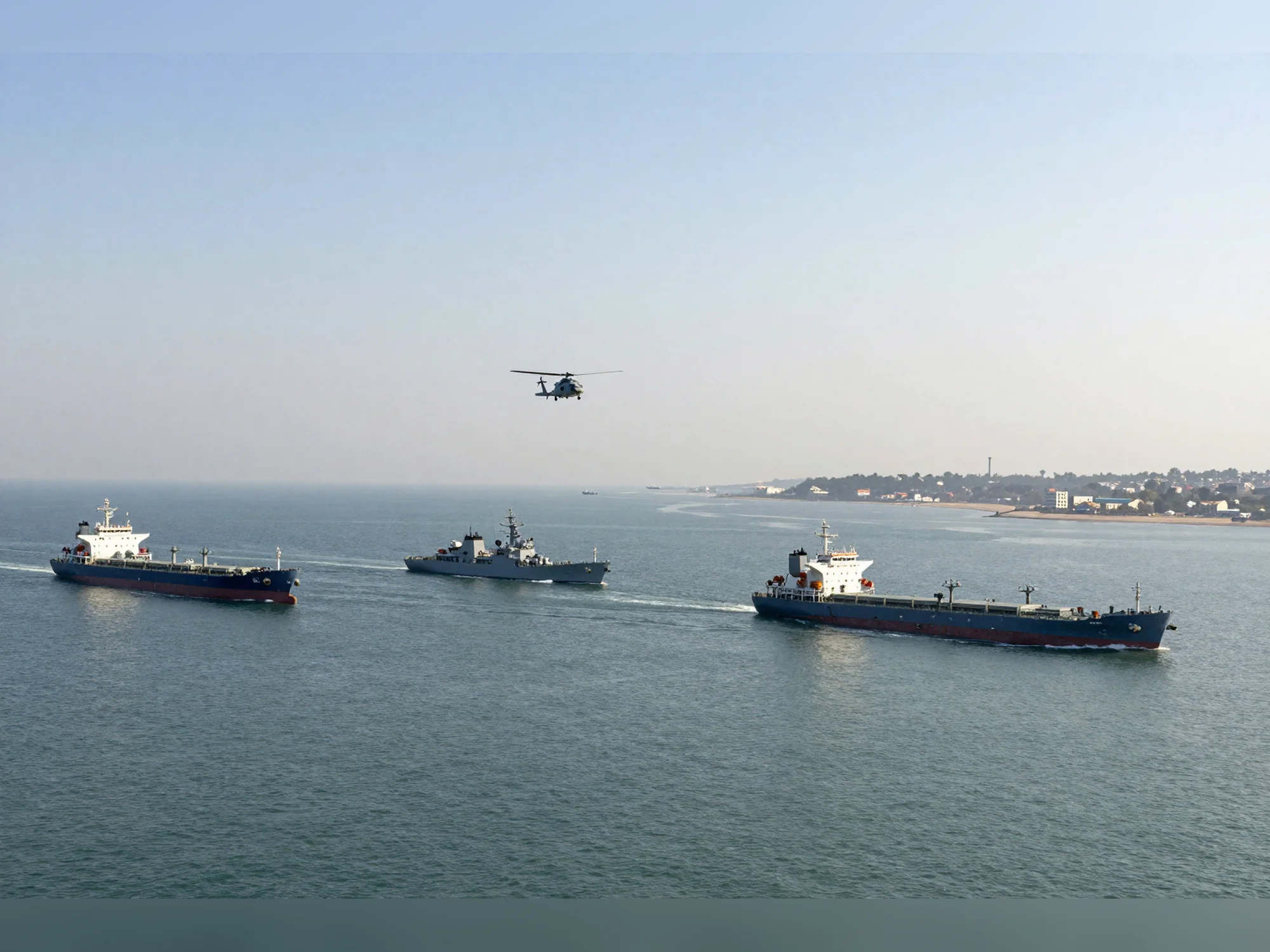
Ships still passed through the Strait of Hormuz on Thursday, even as strikes between the United States and Iran threatened to undo a 60-day memorandum of understanding signed on 15 June. The exchanges have already hit shipping, insurers and energy markets, forcing firms to reassess freight routes and oil traders to weigh conflicting signals on Gulf export capacity. US forces said they struck missile and drone storage sites on Iran's southern coast after an attack on a commercial vessel, while Iran's Revolutionary Guard said it hit US military installations and warned of broader responses if strikes continue, raising the central question of whether the de-confliction mechanisms agreed in Switzerland can survive public flare-ups.
Commercial vessels transited the strait on Thursday, a sign of continued trade even as military activity and diplomatic uncertainty mount. The contrast is stark: visible maritime traffic at the same time as military strikes and diplomatic talks that have been described alternatively as progressing and stalled.
The US military said aircraft struck missile and drone storage sites and radar installations along Iran's southern coastline late on Friday, a response it linked to an earlier attack on a commercial vessel transiting near Oman. US Central Command said forces also intercepted three drones launched in the same coordinated attack and released an unclassified video it described as evidence of Iranian aggression against commercial shipping. Iran reported that a projectile hit the area around a pier in Sirik in Hormozgan province, but the local port authority said operations and equipment were not damaged.
Iran's Islamic Revolutionary Guard Corps said it had responded with strikes against US military installations in the region and warned that future responses would be broader if what it called continued aggression persisted. Bahraini authorities publicly condemned an alleged Iranian drone attack on their territory following the exchanges.
The Singapore-flagged vessel Ever Lovely was named in accounts of the incidents, but the exact damage to that ship remains unclear. Iran has neither confirmed nor denied responsibility, and the US characterization of the strike as a clear violation of the ceasefire rests on US military statements.
Economic fallout and the fragile ceasefire
Shipping companies, insurers and energy traders have already felt the effects. Firms rerouted or reassessed voyages through the Gulf, and insurers have been updating risk models for transits through the strait. One report said global oil prices fell in the hours after the memorandum of understanding was announced on June 15, reflecting initial relief about a pause in hostilities.
Yet the subsequent exchange of strikes has injected a fresh layer of risk, leaving households and businesses that depend on Gulf energy supplies exposed to price swings if security around the strait deteriorates again.
Regional ports and maritime services are also vulnerable to any intermittent closures. Earlier in the month Iran used closure of the Strait of Hormuz as leverage during the conflict, blocking passages at times and prompting negotiators to make reopening the strait a central element of the June 15 memorandum. Mediators in Switzerland had reported agreement in principle on a so called de-confliction cell and communication lines designed to keep the waterway open, but those diplomatic tracks have been uneven.
US and Iranian negotiators met for talks in Switzerland, and mediators said mechanisms to secure shipping had advanced. At the same time, high-level sessions were disrupted by inflammatory public statements from the US president and by subsequent procedural pauses. Swiss officials later said planned talks were postponed and no new date was immediately set after the White House delayed a US delegation trip. Technical negotiations were intended to continue that week but faced logistic uncertainty, according to Swiss statements.
Accounts diverge on several significant points. One account described face to face meetings continuing with progress on mechanisms to secure shipping.
Another described those planned meetings as postponed and the US delegation's trip as delayed. The terms for reopening the strait also carry competing interpretations, with the US president publicly insisting on unrestricted access while mediators reported language about reopening "under Iranian arrangements" within 30 days. These contradictions matter because they affect what negotiators consider acceptable and what each side will publicly insist on.
For now, the memorandum of understanding remains the formal framework: a 60-day pause agreed on June 15 was intended to reduce hostilities and reopen the waterway. But the military exchanges illustrate how fragile that pause is. The US releases of military footage and statements about intercepted drones are currently single-sourced claims from the US military and US Central Command. Other assertions, including details about damage to the Ever Lovely and the exact scope of Iranian strikes, are contested or unconfirmed by independent verification.
Energy markets and insurers will be watching operational details closely. If commercial traffic continues to flow, the immediate shock to global supplies may be limited.
But intermittent closures, even short ones, can push up freight costs, raise insurance premia and create supply disruptions for firms and households reliant on Gulf oil and gas. That exposure is precisely why reopening the strait was made a central negotiating objective in June.
There is no fresh high-level meeting date since talks in Switzerland were paused, leaving the 60-day memorandum of understanding signed on 15 June suspended between fragile progress and renewed confrontation.
AI Generated