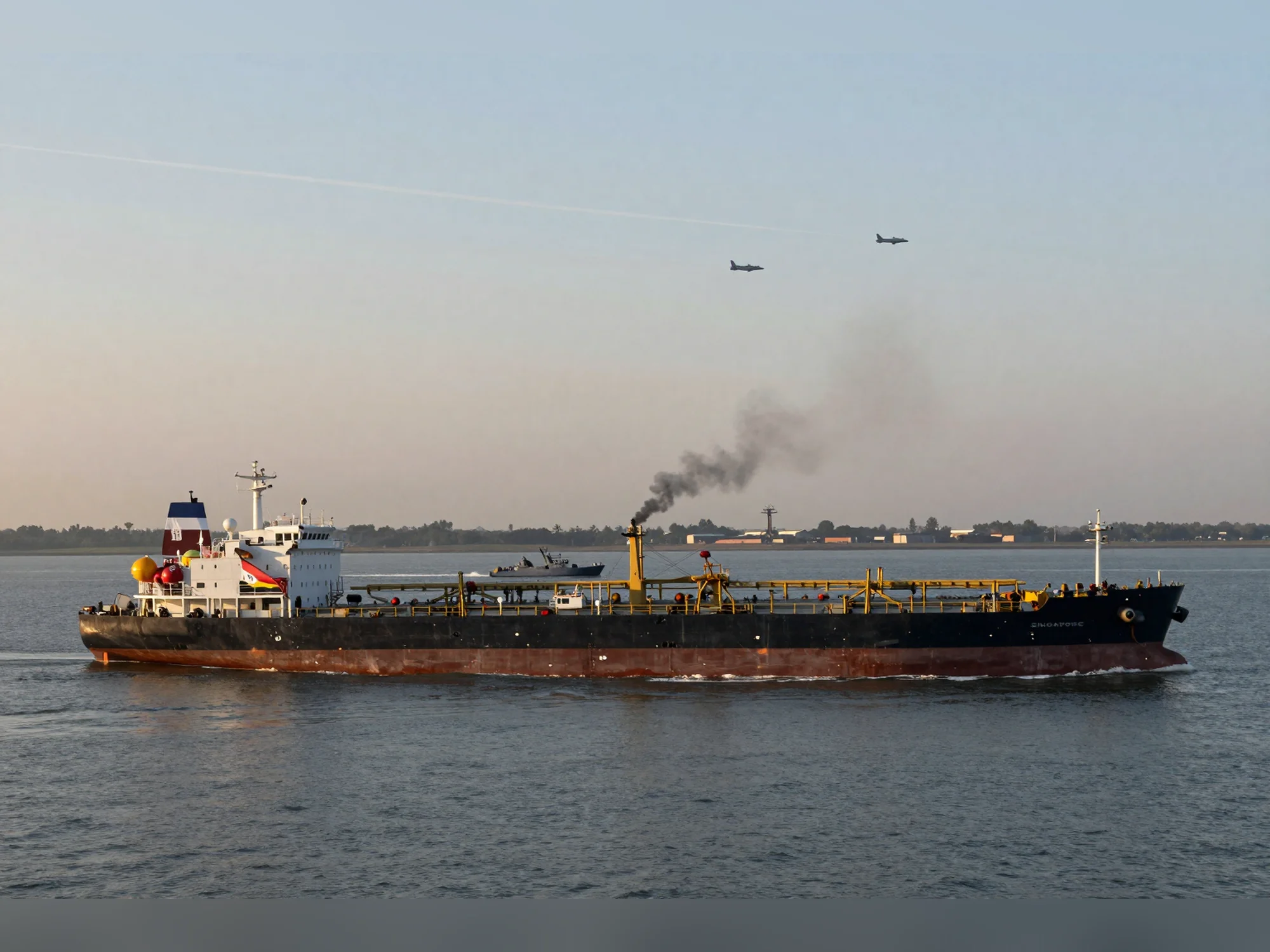
Global oil prices fell to their lowest levels since early March after the United States and Iran exchanged strikes around the Strait of Hormuz. The clashes threatened the June 15 memorandum of understanding that aimed to calm the waterway and reopen passage, and sent immediate shockwaves through energy, shipping and insurance markets. US Central Command said American aircraft struck missile and drone storage locations and radar sites along Iran's southern coast after the Singapore-flagged tanker Ever Lovely was hit off Oman, and Iran's Islamic Revolutionary Guard Corps said it then struck US military installations. The next formal milestone is a 30-day window cited in Iranian reports for reopening the strait under Iranian arrangements, which will test whether the MoU survives renewed military exchanges.
Trade through the Strait of Hormuz has been disrupted after the United States struck Iranian coastal sites and Iran retaliated, following an attack on the Singapore-flagged vessel Ever Lovely. The immediate consequence has been a sharp drop in oil prices and renewed hesitation among shipping firms and underwriters about routine commercial passage through the strait.
Oil markets reacted quickly: prices slid to levels not seen since early March as traders priced in renewed geopolitical risk even while some analysts warned that damaged Gulf oil and gas infrastructure could mean a slow recovery of output. The June 15 memorandum of understanding had already produced volatility, with prices falling in the hours after that agreement was announced. The latest exchange of strikes has amplified uncertainty.
Shipping companies and insurers are now reassessing whether the strait is safe for normal commercial transit. Underwriters are checking risk models and premiums, and ship operators are weighing re-routing against the cost and time of detours. US military statements noted an uptick in traffic since the June agreement, a fact cited when accusing Iran of undermining freedom of navigation and global commerce.
Documentation released by US Central Command said American aircraft targeted missile and drone storage locations and radar sites along Iran's southern coast late on Friday, describing those actions as retaliation for the earlier attack on Ever Lovely. The US military published imagery it said showed explosions from what it characterised as unwarranted aggression against commercial shipping. Iran's Islamic Revolutionary Guard Corps responded by saying it struck US military installations in the region and warned that its responses would escalate if aggression continued.
Local Iranian officials reported that a projectile struck near a pier at Sirik in Hormozgan province, but state media quoted port officials as saying the port was operating normally and that there had been no damage to equipment. Bahrain's foreign ministry condemned an alleged Iranian drone attack on its territory amid the clashes.
The memorandum of understanding and the points of disagreement
The strikes are the first such confrontation since the preliminary peace agreement was announced on June 15. That memorandum discussed the strait's status, but its terms are contested. Some Iranian reports said the strait would reopen under Iranian arrangements within 30 days, while US statements demanded unconditional, toll-free access and rejected any third-party control. European leaders in a grouping known as the E4 insisted reopening must guarantee unrestricted freedom of navigation.
The Guardian provides the clearest account of the disputed MoU terms but doesn't set a firm timeline for implementation beyond the 30-day claim reported by Iranian sources, leaving the practical schedule and any enforcement mechanism unclear. Shipping traffic through the strait had reportedly increased after the June agreement, a trend the US military cited as evidence that Iranian actions were damaging freedom of navigation and global commerce.
Reporting on the scale of damage to the Ever Lovely and on the precise targets of Iran's counterstrikes comes primarily from Al Jazeera, and independent verification of those specific details isn't present in the available reporting. That gap matters because assessments of damage and target selection will shape how insurers and charterers price risk and whether flag states or shipowners seek alternative routes or convoys.
Analysts have highlighted two practical frictions at the heart of the dispute. First, the mechanics of reopening a waterway that's one of the world’s busiest for oil transit: whose arrangements govern passage, and how will vessels be inspected or cleared? Second, the enforcement question: what happens if one side deems a transit to violate agreed terms? The exchanges of strikes this week have shown that those questions aren't theoretical.
For merchant operators, the choices are immediate. Some may accept higher insurance costs and continue using the strait if the financial calculus makes sense. Others will reroute around the Cape of Good Hope or use longer paths that add days and fuel costs to voyages. The result is likely to be a near-term increase in freight rates and logistics headaches for companies relying on timely deliveries of crude and refined products.
Politically, the incident has prompted condemnations and clarifications. The US framed its strikes as defensive and tied to a duty to protect maritime commerce.
Iran framed its actions as retaliatory and warned of stepped-up responses if it perceived continued aggression. Bahrain's complaint about alleged drone strikes broadened the diplomatic fallout beyond Tehran and Washington.
Originally reported by Al Jazeera.
Related Articles
- Mortgage rates rise: 1% shift makes buying costlier
- Ships transit Hormuz as US-Iran strikes put MoU at risk
The next formal test is the 30-day window cited in Iranian reporting for reopening the Strait of Hormuz under Iranian arrangements; that deadline will show whether the memorandum survives renewed military exchanges and whether shipping and insurance markets regain confidence.
AI Generated

