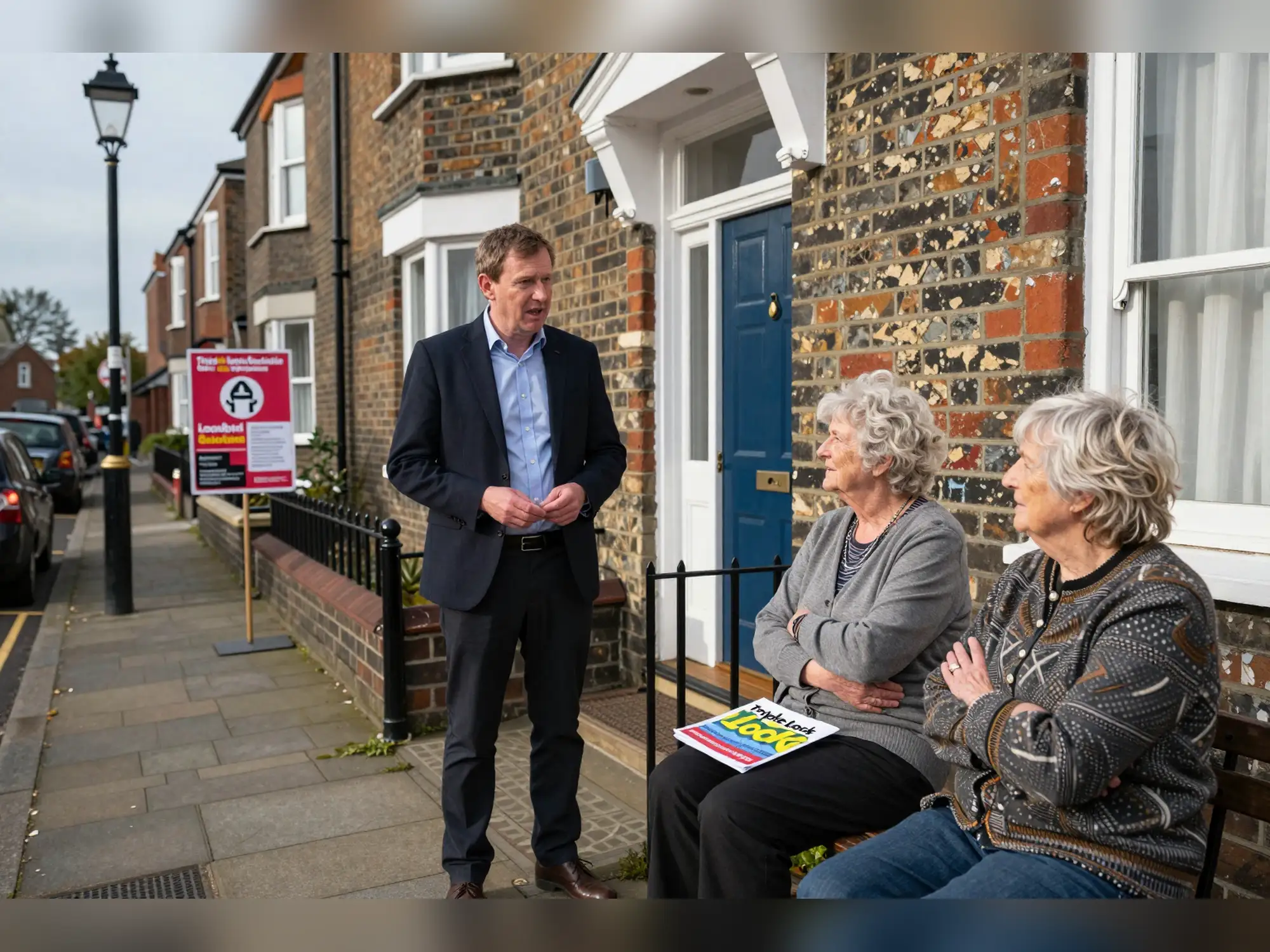
On a doorstep in Makerfield, Andy Burnham promised to protect a policy voters treat as sacrosanct. He pledged to keep the triple lock, the rule that makes the state pension rise each year by the highest of average earnings growth, inflation or 2.5 percent, a guarantee that has shaped payouts for more than a decade. Pensioners are the direct beneficiaries and their voting power is the political constraint most commentators say blocks change, even as business figures and policy experts urge a rethink. Backbench Labour MPs say any serious reform would likely wait until after the next general election.
On the doorstep in Makerfield during the by-election campaign, Burnham framed the triple lock as untouchable political ground, a position shared by frontbench and leadership figures across Labour. That posture matters because the policy isn't just technical uprating arithmetic. It's a clear, repeatable promise to older voters that their state pension won't fall behind wages or prices, and politicians who break that promise risk immediate electoral backlash.
Why pensioners hold the cards
The triple lock was designed to protect pensioners from falling living standards. Under the rule, the state pension increases each year by whichever is highest: average earnings, inflation, or a 2.5 percent floor. Pensioners are the direct beneficiaries of the rule and their turnout and voting patterns make them an especially potent bloc in tight contests, according to reporting on the campaign debate.
That political reality helps explain why even critics inside Labour and across the political spectrum stop short of proposing immediate cuts. Backbench Labour MPs tell colleagues they would prefer an honest, evidence-based debate about a cheaper uprating method, but warn that pursuing that argument before the next election would be politically risky. Frontbench and leadership figures have publicly committed to protecting the lock through the current Parliament to avoid alienating older voters, while some MPs say a shift could follow further study after the next election.
Not every major party shares Labour's caution. The Green Party is the only major party named in coverage to endorse a specific change: removing the fixed 2.5 percent floor, which would convert the triple lock into a double lock that compares only inflation and earnings. That proposal aims to blunt some long-term cost pressures without ending uprating by a broad index.
Numbers, critics, and the case for reform
Pressure for change is coming from business leaders and policy analysts who say the mechanism is unaffordable over the long term. The head of the Iceland supermarket chain, former chancellor Jeremy Hunt, a think tank linked to Tony Blair, and the Resolution Foundation have all urged a rethink.
They argue that the triple lock is a blunt instrument that has outlived the problem it was designed to fix.
The Resolution Foundation's report, widely cited in the coverage, called the triple lock a "poorly designed, unfair, arbitrary ratchet." The foundation argues the policy locks in gains that have amplified pensioners' living standards relative to the rest of the population. One outlet's reporting of the foundation's analysis included fiscal projections and metrics showing substantial projected increases in state pension spending and a notable divergence in living-standards growth between pensioners and non-pensioners. Those fiscal figures and the divergence metric appeared only in that outlet's account.
Critics argue the triple lock creates an arbitrary upward ratchet in spending that will become harder to sustain as demographic pressures build. Supporters counter that the policy protects people on fixed incomes from price shocks and from falling behind as wages rise. The political calculus continues to favor protection because pensioners remain a dependable voting bloc and because breaking the promise would hand opponents a vivid campaign line.
Coverage differs on whether Labour's leadership stance reflects permanent caution or a temporary tactical posture tied to the immediate by-election. Some backbench MPs say their party's public commitment to the lock is tactical, and that a reasoned debate about uprating methods could follow after the next general election. Others worry that any U-turn would be seized on by rivals and erode trust among older voters.
Opinion pieces and reposted commentaries amplified the same central theme: fiscal arithmetic is colliding with electoral caution. Several columns and analysis pieces argued that policymakers fear an electoral backlash if they trim pension uprating now, even as long-term spending pressures mount.
Who is asking for change varies from business leaders to former ministers to think tanks. Their critiques differ in tone and prescription, but they converge on one point: the triple lock, as currently constructed, has distributional and fiscal consequences that merit serious discussion once the immediate electoral cycle has passed.
Related Articles
- 2.8% inflation leaves savers losing ground
- Oil tumbles to March lows as Hormuz strikes unsettle trade
- Mortgage rates rise: 1% shift makes buying costlier
Backbench Labour MPs say the earliest realistic window to alter manifesto commitments on the triple lock would be after the next general election. Originally reported by Bloomberg.
AI Generated


